
An ancient prophecy. A new king. The fall of a royal dynasty. The destruction of Baal worship. The dramatic events surrounding Jehu marked one of the most decisive turning points in the history of the northern kingdom of Israel.
Israel was about to witness a dramatic change of power, and observers expected the shift to redefine authority in the land for years to come. In the weeks that followed, local leaders, soldiers, and citizens prepared for a new era, adjusting loyalties and strategies as the political landscape shifted.
Jehu, a commander in the army of Israel, was anointed king by a messenger sent by the prophet Elisha, marking a formal appointment and signalling the transition of royal leadership within the nation, a move that would shape policy, alliances, and the fate of the realm.
But this was no ordinary royal succession.
Jehu had been given a mission: to bring judgement upon the house of Ahab and to put an end to the organised worship of Baal in Israel.
What had been prophesied many years earlier was now beginning to come to pass.
The Prophecy Against Ahab and Jezebel
Long before Jehu became king, the prophet Elijah had delivered a powerful message of judgement against the house of Ahab.
King Ahab had taken possession of Naboth’s vineyard after Jezebel arranged for Naboth to be falsely accused and put to death. God sent Elijah to confront the king and announce the consequences of his actions.
Elijah declared that disaster would come upon Ahab’s house. He also delivered a specific prophecy concerning Jezebel: dogs would devour her by the wall of Jezreel.
These words were recorded in 1 Kings 21:17–24.
The prophecy did not disappear with the passing of time. Years later, it would be fulfilled through the events surrounding Jehu.
JEHU IS ANOINTED KING — A DIVINE MISSION BEGINS
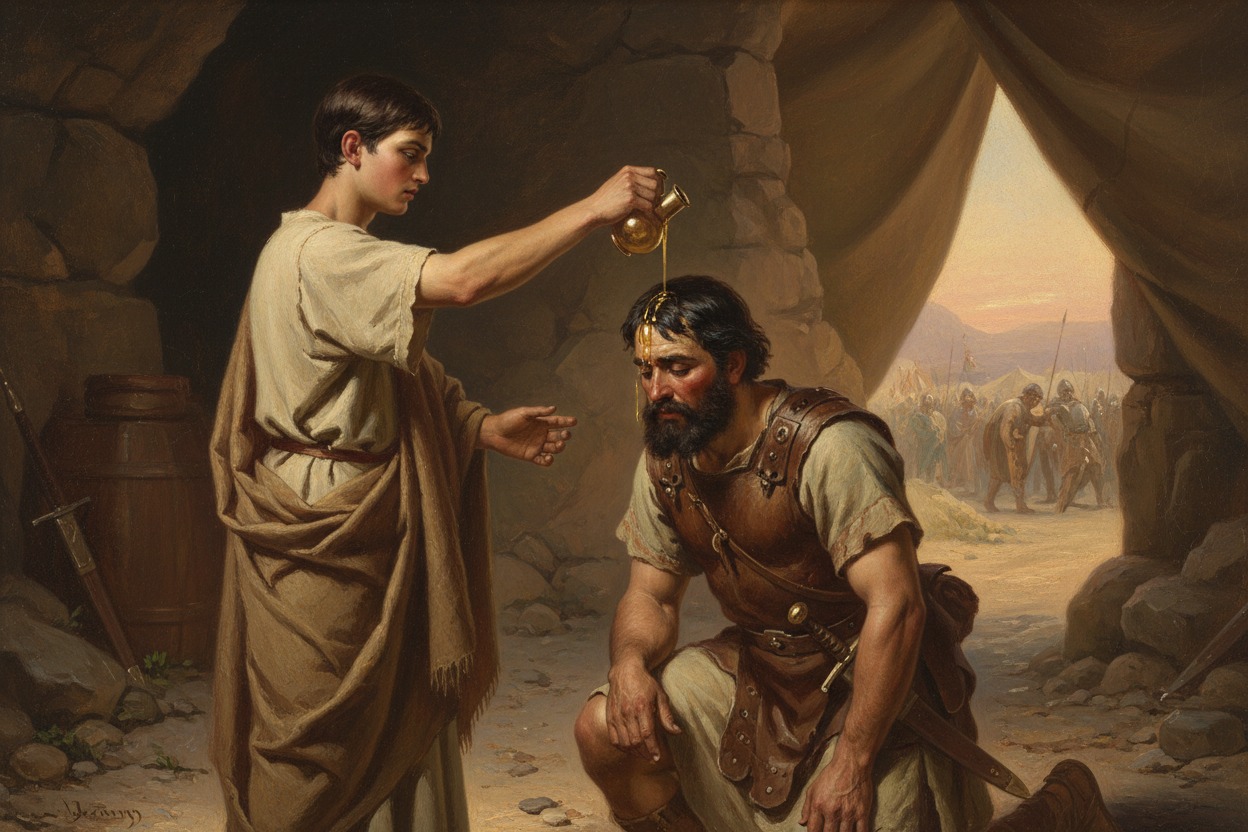
The appointed moment finally arrived.
Elisha the prophet sent one of the sons of the prophets to Ramoth-gilead, where Jehu was serving as a commander in Israel’s army.
The young prophet took Jehu aside, poured oil upon his head, and delivered the message:
“Thus says the LORD God of Israel: I have anointed you king over the people of the LORD, over Israel.”
He then gave Jehu his mission: to strike down the house of Ahab and bring judgement for the blood of the Lord’s servants shed by Jezebel.
Jehu had been anointed king, but his assignment was far greater than taking the throne. He was to become the instrument through which the announced judgement against Ahab’s dynasty would be carried out.
Bible reference: 2 Kings 9:1–10.
JEHU RIDES TO JEZREEL — KING JORAM IS KILLED
After receiving the anointing, Jehu set out for Jezreel, where King Joram, the son of Ahab, was staying.
When Joram saw Jehu approaching, he went out to meet him, accompanied by Ahaziah, king of Judah.
The meeting ended in violence. Jehu drew his bow and struck Joram. His body was thrown onto the plot of ground that had belonged to Naboth.
This was especially significant because Elijah had previously spoken of judgement connected with the blood of Naboth.
The events were unfolding just as the Lord had declared through His prophet.
Bible reference: 2 Kings 9:14–28.
JEZEBEL’S FINAL MOMENT — ELIJAH’S PROPHECY FULFILLED
When Jezebel heard that Jehu had arrived in Jezreel, she prepared herself and looked out from a window of the palace.
Jehu called out, asking who was on his side. Two or three eunuchs looked down, and he ordered them to throw her down.
Jezebel was thrown from the window. Later, when Jehu ordered that she be buried, the searchers found only her skull, feet, and the palms of her hands. Dogs had devoured her body.
Jehu then recognised that the word of the Lord spoken through Elijah had been fulfilled.
The prophecy recorded in 1 Kings 21:23 had come to pass.
Bible reference: 2 Kings 9:30–37.
THE HOUSE OF AHAB IS DESTROYED
Jehu continued carrying out the mission entrusted to him.
He sent letters to the leaders in Samaria, challenging them to choose one of Ahab’s sons and place him on the throne. The leaders, afraid to oppose Jehu, refused to resist him.
At Jehu’s command, the seventy sons of Ahab were killed. Their heads were sent to Jezreel, and Jehu addressed the people, pointing to the fulfilment of the Lord’s word spoken through Elijah.
Jehu then continued his campaign against those remaining from Ahab’s household.
The dynasty that had promoted idolatry and brought great injustice upon Israel was brought to an end.
Bible reference: 2 Kings 10:1–17.
JEHU DESTROYS THE WORSHIP OF BAAL IN ISRAEL
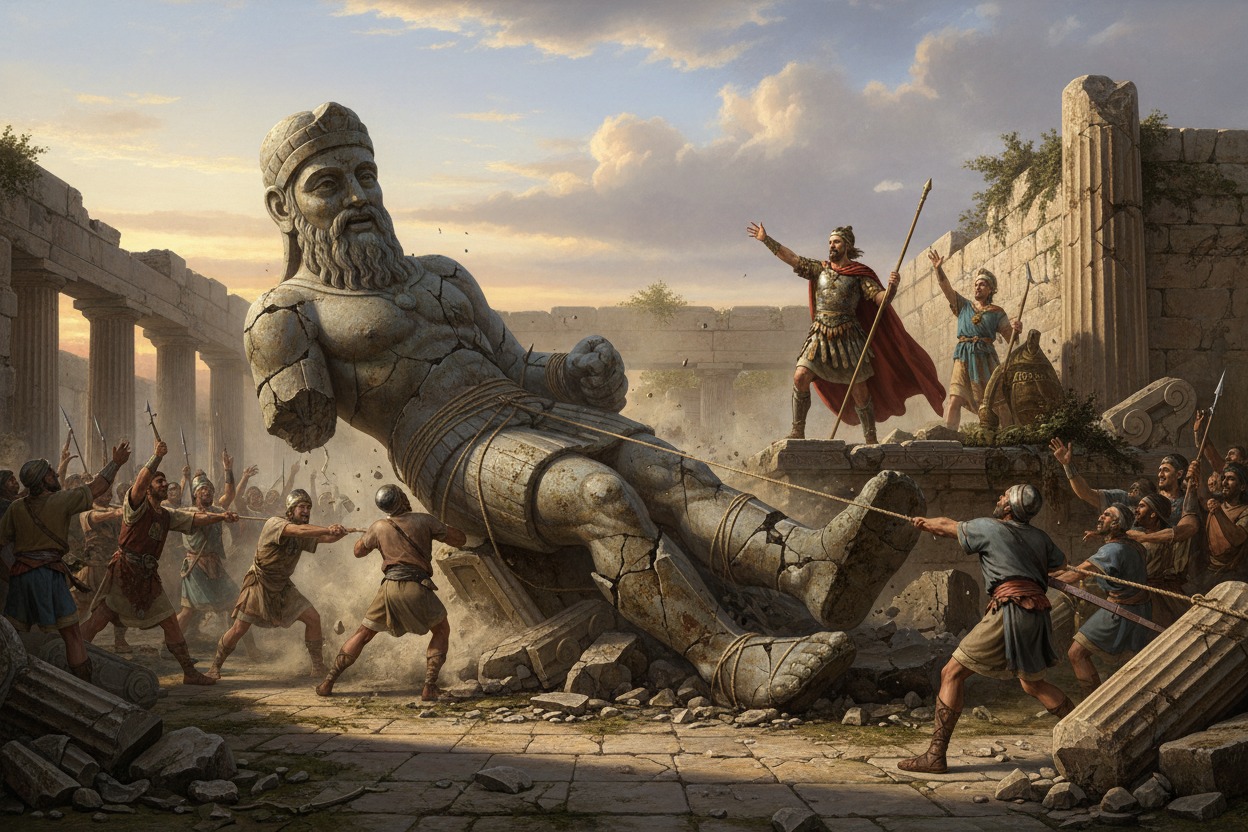
Jehu’s mission did not end with the destruction of Ahab’s family. He also turned his attention to the worship of Baal, which Ahab and Jezebel had promoted throughout Israel.
Jehu announced that he would hold a great sacrifice for Baal. He summoned all the prophets, servants, and priests of Baal, insisting that no one should be absent.
The temple of Baal was filled with those who had gathered for the ceremony.
Before the event began, Jehu made sure that none of the servants of the Lord were among them. He then positioned armed men around the temple and gave the order to strike down those gathered there.
Afterwards, the sacred pillar and objects associated with Baal worship were brought out and destroyed. The temple itself was demolished and turned into a place of refuse.
The biblical account records:
“Thus Jehu destroyed Baal from Israel.” — 2 Kings 10:28 (NKJV)
It was a decisive blow against the organised worship of Baal in the northern kingdom.
JEHU IS REWARDED
The Lord acknowledged that Jehu had carried out what was right concerning the house of Ahab. God promised that Jehu’s descendants would sit on the throne of Israel to the fourth generation.
Jehu reigned over Israel for twenty-eight years.
Bible reference: 2 Kings 10:29–36.
CONCLUSION — GOD’S WORD DOES NOT FAIL
The story of Jehu is one of the most dramatic accounts in the history of Israel’s kings.
Many years earlier, Elijah had announced judgement against Ahab’s house and Jezebel. Later, God raised up Jehu and anointed him king to carry out that judgement.
Joram was killed. Jezebel met the fate Elijah had foretold. Ahab’s dynasty was brought down, and the organised worship of Baal was destroyed in Israel.
The events demonstrate that the word spoken through God’s prophets did not fail, even though years passed before its fulfilment.
Yet Jehu’s story also carries a warning: carrying out one part of God’s will does not remove the responsibility to obey Him in every area of life.
SPIRITUAL LESSONS FROM JEHU’S STORY
- God does not overlook injustice. Ahab and Jezebel’s actions had serious consequences.
- God’s word remains true. The passing of time does not cancel what God has declared.
- Idolatry is serious. Baal worship led Israel away from the Lord and brought devastating consequences.
- Obedience must be wholehearted. Jehu destroyed Baal worship but continued to tolerate the golden calves.
- A God-given assignment does not replace a life of faithfulness. Jehu’s story reminds us that obedience must extend beyond a single achievement.
KEY BIBLE VERSE
“And the LORD said to Jehu, Because thou hast done well in executing that which is right in mine eyes, and hast done unto the house of Ahab according to all that was in mine heart, thy children of the fourth generation shall sit on the throne of Israel.”
2 Kings 10:30 (KJV)
BIBLE REFERENCES — READ THE FULL ACCOUNT
For readers who wish to study the complete story, the following passages provide the biblical background and details:
- 1 Kings 21:1–16 — Naboth’s vineyard and Jezebel’s plot.
- 1 Kings 21:17–29 — Elijah announces judgement against Ahab and Jezebel.
- 2 Kings 9:1–13 — Jehu is anointed king.
- 2 Kings 9:14–29 — Joram and Ahaziah are struck down.
- 2 Kings 9:30–37 — Jezebel’s death and the fulfilment of Elijah’s prophecy.
- 2 Kings 10:1–17 — The destruction of Ahab’s descendants.
- 2 Kings 10:18–28 — Jehu destroys the worship of Baal.
- 2 Kings 10:29–36 — Jehu’s incomplete obedience and the account of his reign.
THE BIBLE’S MESSAGE
Jehu was anointed king. Ahab’s house fell. Jezebel’s prophecy was fulfilled. Baal’s temple was destroyed.
The word of the Lord, spoken years before, came to pass.