1. Introduction
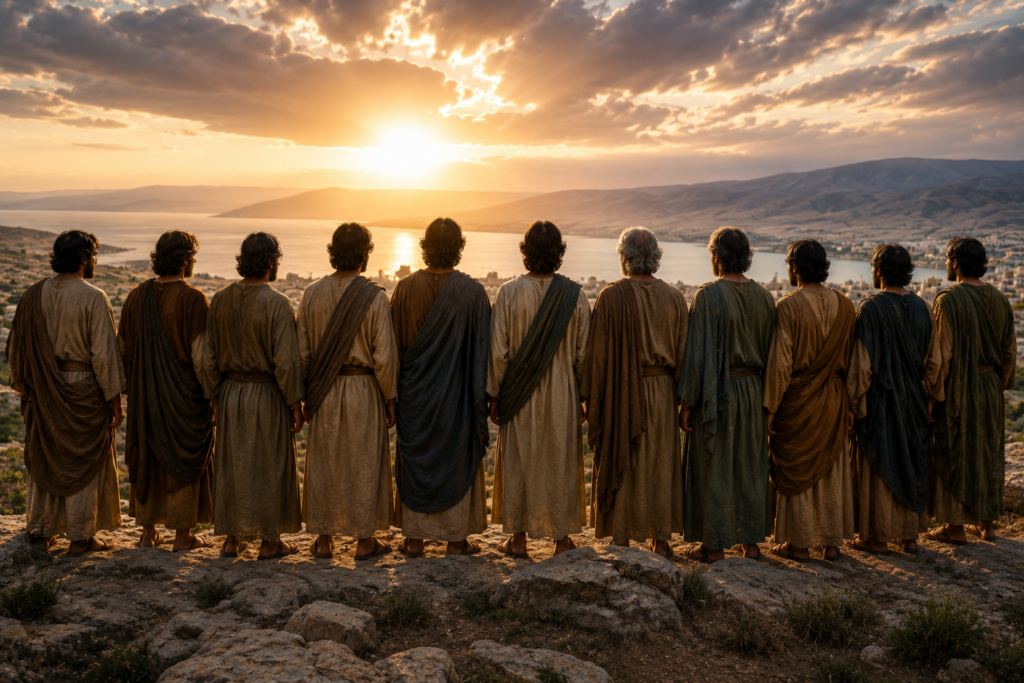
The apostles of Jesus Christ were not merely teachers of ideas or promoters of a philosophy. They were direct witnesses of His life, death, and resurrection. Their message was not a fabricated story, but a testimony based on what they personally saw and experienced.
One of the strongest elements that supports the credibility of their message is the way they died: most of them accepted suffering and death without denying their faith.
2. How the Apostles Died
Although not all details are recorded directly in the Bible, early Christian tradition and historical writings provide consistent accounts:
- Peter – traditionally crucified (upside down
- Andrew – traditionally crucified in Greece
- James (son of Zebedee) – killed by the sword (biblical account) Source: Acts 12
- John – traditionally died of natural causes after exile
- Philip – traditions vary (martyrdom)
- Bartholomew – traditionally martyred
- Thomas – traditionally killed with a spear in India
- Matthew – traditions vary (martyrdom)
- James (son of Alphaeus) – uncertain
- Simon the Zealot – traditions vary (martyrdom)
- Jude (Thaddeus) – traditionally martyred
While the exact methods differ in historical sources, one fact remains consistent: they did not renounce their faith.
3. What Their Death Reveals
a) They did not die for a fabricated story
People may die for a lie if they believe it to be true. But the apostles were in a unique position—they would have known whether their message was true or false. They claimed to have seen the risen Jesus. If it had been a fabrication, they would have known it.
Their willingness to face death rather than deny their testimony strongly suggests they were convinced of its truth.
b) The message was more valuable than their lives
For the apostles, the message of the Gospel was not optional—it was reality. They considered it worth suffering and even dying to share it.
c) Their courage was not natural
Before the resurrection, the apostles were fearful and in hiding. After they proclaimed that they had seen Christ alive, they became bold and fearless, even in the face of death. Such a radical transformation calls for an explanation.
4. The Bible Is Not Just a Story
The Bible is not a collection of myths, but a historical and spiritual testimony passed down by people who were willing to die for what they had seen.
Relevant verse:
“For we did not follow cleverly devised fables when we made known to you the power and coming of our Lord Jesus Christ, but were eyewitnesses of His majesty.” (2 Peter 1:16)
5. Conclusion
The deaths of the apostles stand as one of the strongest testimonies that the Christian message was not a human invention. They did not gain wealth or power; instead, they endured persecution, suffering, and death.
This shows that:
- They truly believed in what they preached
- Their message was based on direct experience
- The Christian faith has a real foundation, not merely a symbolic one
The Bible is not just a story. It is the testimony of people who were willing to lose everything for the truth they had seen.