1. Introduction
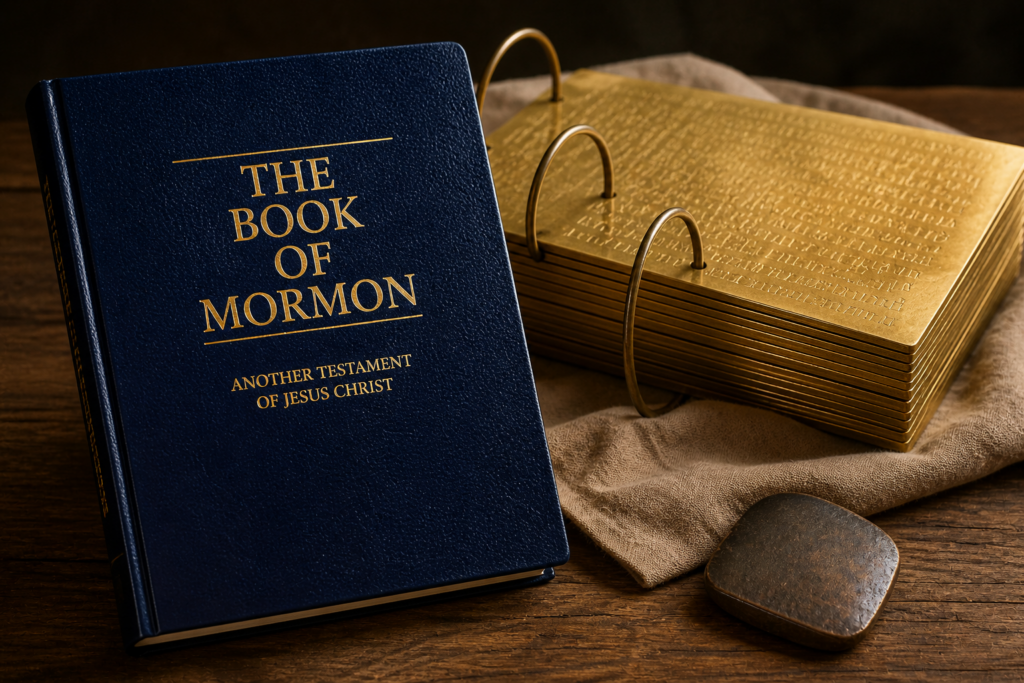
The Book of Mormon is the foundational religious text of the movement founded by Joseph Smith in the 19th century. Its adherents consider it “another testament of Jesus Christ,” complementary to the Bible.
From a biblical perspective, any religious writing must be evaluated strictly in the light of Scripture.
2. Origin of the Book of Mormon
According to the official account:
- In 1823, Joseph Smith claimed he was visited by an angel named Moroni
- The angel revealed the existence of golden plates containing a sacred record
- Smith stated that he translated them by divine power and published the book in 1830
From a biblical perspective:
- “But even if we or an angel from heaven should preach a gospel other than the one we preached to you, let them be under God’s curse!” (Galatians 1:8)
- Any message coming from “angels” must be tested, not automatically accepted
3. Content of the Book of Mormon
The book describes:
- The migration of groups from the Near East to the Americas
- The formation of two peoples: Nephites and Lamanites
- Religious and military conflicts
- The appearance of Jesus Christ in the Americas after His resurrection
From a biblical perspective:
- The Bible does not mention such a work of Christ outside Israel
- The central events of salvation are presented as complete and sufficient in Scripture
4. Historical and Scientific Issues
Research raises several difficulties:
- Lack of clear archaeological evidence for the civilizations described
- No confirmation of the “reformed Egyptian” language
- Parallels with 19th-century religious ideas
From a biblical perspective:
- God does not call for faith based on clear contradictions with reality
- Scripture is consistent and confirmed over time through multiple testimonies
5. Doctrinal Differences from the Bible
When comparing teachings:
- The Bible presents revelation as complete (Revelation 22:18–19)
- The Book of Mormon introduces additional revelations
- The Bible teaches that the Gospel was delivered once for all (Jude 1:3)
From a biblical perspective:
- “Do not add to his words, or he will rebuke you and prove you a liar.” (Proverbs 30:6)
- Truth does not change or become completed through later writings
6. Biblical Evaluation
From a Scripture-based position:
- The Bible is the only fully authoritative and inspired Word of God “All Scripture is God-breathed and is useful for teaching, rebuking, correcting and training in righteousness.” (2 Timothy 3:16–17)
- All teachings must be examined in the light of the Bible “Test everything; hold fast what is good.” (1 Thessalonians 5:21)
- Any revelation that contradicts or adds to Scripture must be rejected
Therefore:
- The Book of Mormon cannot be considered a genuine divine revelation from this perspective
7. Conclusion
The Book of Mormon is an important religious text for its adherents; however:
- It lacks biblical confirmation
- It introduces teachings beyond Scripture
- It is based on a revelation that comes after the biblical canon
The conclusion from a biblical perspective is:
- Only the Bible is worthy of trust as the complete revelation of God
- All teachings must be tested and examined in the light of the Bible
Sources
- https://en.wikipedia.org/wiki/Book_of_Mormon
- https://en.wikipedia.org/wiki/Origin_of_the_Book_of_Mormon
- https://www.churchofjesuschrist.org/study/manual/gospel-topics-essays/book-of-mormon-translation
- https://ro.wikipedia.org/wiki/Cartea_lui_Mormon
- https://www.venitilahristos.org/crezuri/cartea-lui-mormon/ce-este-cartea-lui-mormon