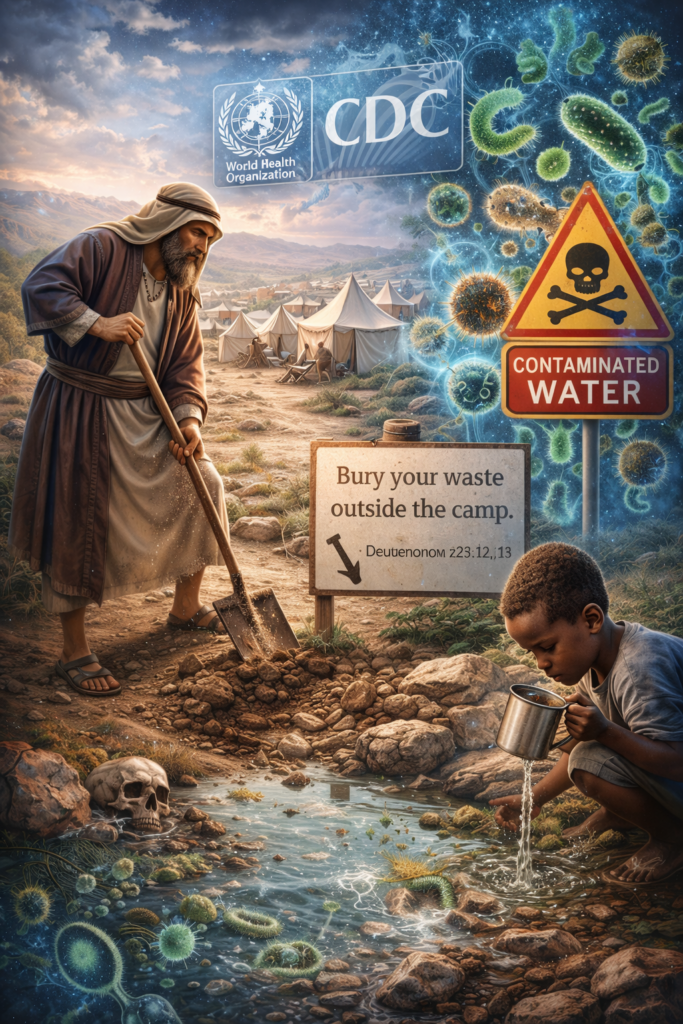
1. The biblical instruction
The Bible contains a clear rule regarding community hygiene:
Deuteronomy 23:12-13 — “You shall have a place outside the camp… you shall dig and cover what comes from you.”
Principle: human waste must not remain within the living area, but be buried.
2. What this rule means medically
Human feces are one of the main transmission sources of infectious diseases:
- cholera
- typhoid fever
- dysentery
- hepatitis A
- intestinal parasites
Transmission occurs through contamination of water and soil (fecal–oral transmission).
Medical sources:
World Health Organization — Sanitation
https://www.who.int/health-topics/sanitation
CDC — Global Water, Sanitation, & Hygiene (WASH)
https://www.cdc.gov/healthywater/global/sanitation/index.html
3. The modern discovery
Only in the 19th century did medicine understand the connection between waste and epidemics:
- John Snow (1854) — cholera and contaminated water
- development of sewage systems
- beginning of modern epidemiology
Medical history:
CDC — History of Cholera
https://www.cdc.gov/cholera/history.html
Encyclopaedia Britannica — John Snow epidemiology
https://www.britannica.com/biography/John-Snow-British-physician
4. Parallels between the Bible and public health
The biblical rule includes three essential concepts of modern hygiene:
- separation of waste from living areas
- prevention of environmental contamination
- protection of the community
These form the basis of modern sanitation systems.
5. Sanitary importance
The World Health Organization states that lack of safe sanitation is one of the major global causes of death from digestive infections.
WHO report:
https://www.who.int/news-room/fact-sheets/detail/drinking-water
6. Significance
The biblical text was written in a time when there was no:
- microbiology
- knowledge of bacteria
- sanitation infrastructure
Yet it accurately describes a method that prevents epidemics.
7. Conclusion
The Bible required:
- removal of waste
- burial of waste
- community protection
Modern medicine confirms:
this is one of the most important public health measures.
Result:
The biblical sanitary rule correctly reflects epidemiological principles long before the discovery of bacteria.
Leave a Reply